
I’ve addressed the “Rationale” and “Affirmations” portions of the Danvers Statement in previous articles. In this final post we’ll examine its purposes. (They are italicized.) Photo by Priscilla Du Preez 🇨🇦 on Unsplash The section begins: “Recognizing our own abiding sinfulness and fallibility, and acknowledging the genuine evangelical standing of many who do not agree with all of our convictions, nevertheless, moved by the preceding observations and by the hope that the noble Biblical vision of sexual complementarity may yet win the mind and heart of Christ’s church, Continue Reading
1 Timothy 2:12 doesn’t forbid women from teaching in the church
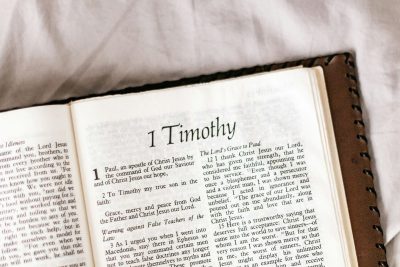
Let’s examine the main passage of Scripture used by complementarians for their case. “ Let a woman learn quietly with all submissiveness. I do not permit a woman to teach or to exercise authority over a man; rather, she is to remain quiet.” –1 Timothy 2:11-12 (ESV) Photo by Sincerely Media on Unsplash Complementarians believe Paul’s concern in verse 12 is that women should not teach men authoritatively in the church but submit to male leadership instead.[i] They claim the phrase “a woman” refers to all women at all times and that Paul wants Continue Reading
How its own official statement reveals the flaws of complementarianism

In my last post, I addressed how legalism is inherent in complementarian theology, something I noticed during Alisa Childers's recent interview of Denny Burk, president of the Council on Biblical Manhood and Womanhood. Image by Ioana Radu from Pixabay Burk pointed listeners to the Danvers Statement as the go-to document for the basic tenets of complementarianism. According to the CBMW website, this statement summarizes the need for the organization and serves as an overview of its core beliefs. The Danvers Statement was prepared by several complementarian leaders in Danvers, Continue Reading
How this widely accepted doctrine hides its true nature
Back in the day, my Bible college professor would jokingly quote the old adage, ‘I don’t smoke, drink or chew, or go with those who do.” He’d grown up in the Pentecostal Holiness movement, where even playing cards or bowling were seen as sinful. Photo by Jim Petkiewicz on Unsplash Today, most Christians don’t hold to strict rules against ballroom dancing or enjoying a glass of wine. Yet there’s an insidious form of legalism running rampant in the church. Legalism is adding man-made rules to the Word of God, calling things sinful which God does not. It is based on works Continue Reading